FLORA
Plant Scientists’ Research Attention
TYPE
Flora
COMMON NAME
Sunflower
SCIENTIFIC NAME
Canis lupus
STUDIED AREA
Gunung Kanthan, Perak
RESEARCHER IN CHARGE
Amy Angert
Keith Adams
Sally Aitken
Jonathan Davies
Patrick Martone
Plant Scientists’ Research Attention Is Skewed Towards Colourful And Broadly Distributed Flowers
Scientists’ research interests are often skewed toward charismatic organisms, but quantifying research biases is challenging. By combining bibliometric data with trait-based approaches and using a well-studied alpine flora as a case study, we demonstrate that morphological and colour traits, as well as range size, have significantly more impact on species choice for wild flowering plants than traits related to ecology and rarity. These biases should be taken into account to inform more objective plant conservation efforts. Throughout human history, plants have played the role of silent partners in the growth of virtually every civilization.
Humans have exploited wild plants and crops as sources of food2, used trees as combustible material and to craft manufactured goods1,3 and taken inspiration from the beauty of flowers for poetic and artistic endeavours4,5. Since the birth of modern science, plants have also become the subjects of intense investigation.
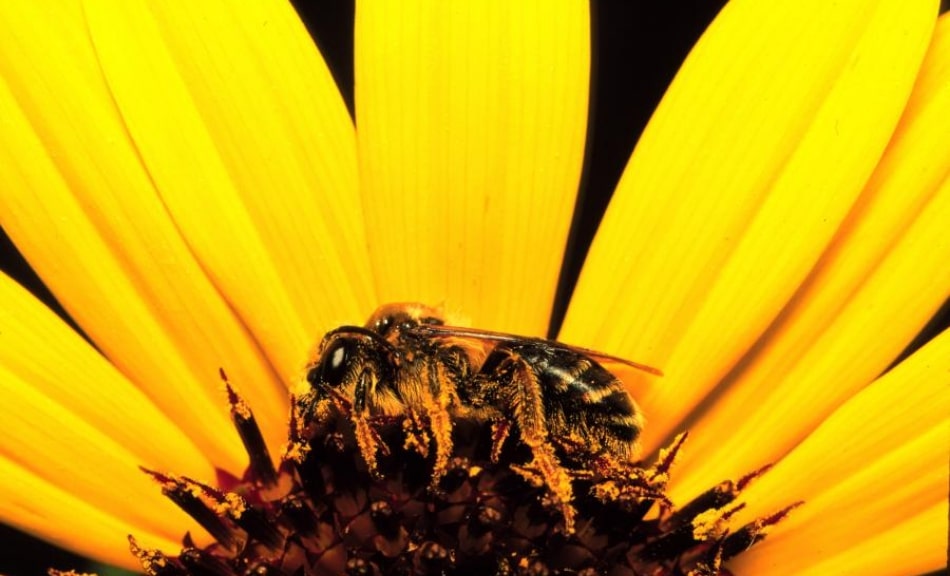
As scientists systematically studied the natural history of plants, they soon realized that many of these species could function as model organisms to address fundamental scientific questions. Edward O. Wilson famously stated that ‘[…] for every scientific question, there is the ideal study system to test it’ and thus, the choice of a researcher to study one species or another is often driven by functional criteria (for example, ploidy level for genetics studies and ease of growth under controlled conditions). Still, outside of the laboratory or the greenhouse, field scientists may be challenged in their choice of focus organisms by concerns that exceed strictly scientific research interests. As a result, when plant scientists select to study a specific wild plant among the pool of species available in a given study region, it may be that factors unrelated to the biological question end up influencing species choice and introducing biases in the research outcome. Whereas this is not a problem per se, a disparity in scientific attention towards certain species may become a concern in conservation biology, where it is paramount to ensure a ‘level playing field’ in selecting conservation priorities.